All Categories
Featured

Table of Contents
- – Key Factors When Assessing Maryland Solar Panel...
- – Financial Perks Including The $750/kW Rebate U...
- – Why Is The 10 kW Suggested System Size Preferr...
- – Locating The Perfect Maryland Solar Panel Inst...
- – Evaluating The Relationship Between Roof Suita...
- – Can Maryland Solar Panel Installation Professi...
Key Factors When Assessing Maryland Solar Panel Installation Companies
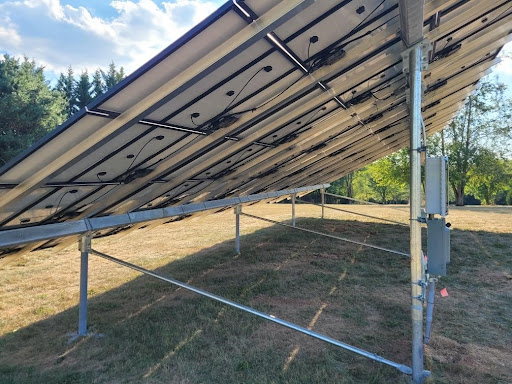
When you assess Maryland Solar Panel Installation Companies, you are navigating a complicated landscape where local regulations and technical requirements govern the long-term effectiveness of your energy transition. Because a typical residential panel fitting ranges from $31,075 to $42,043 before incentives, understanding the underlying mechanisms of system sizing and financial offsets is essential to protecting your investment. You must reconcile your specific household energy requirements with the structural constraints of your roof and the legal nuances of grid connection. By investigating how these variables interact, you will acquire the clarity needed to select a competent professional who can ensure your array is both compliant and cost-effective. This article offers the analytical framework necessary to determine the most suitable partner for your project and maximize the return on your solar investment.
“Choosing the right system size is crucial.” — Lumina Solar
Financial Perks Including The $750/kW Rebate Up To $7,500
The $750/kW rebate, up to $7,500, is a primary component of the State Income-based Program designed to decrease the barrier to entry for income-eligible households. Beyond this specific grant, you can utilize several state and federal mechanisms to offset the initial capital required for a PV installation. These financial aids function by lowering your net spending or offering long-term tax breaks, efficiently shortening the period needed to achieve a return on your investment.
“Anne Arundel County offers homeowners a one-time property tax credit of up to $2,500 for installing a solar energy system on their property.” — justenergy.com
When you investigate who are the top Maryland Solar Panel Installation Companies, you should prioritize those that proactively integrate these specific financial deductions into their documentation:
- Federal Solar Tax Credit: A non-refundable credit attributed to your federal income tax liability based on a proportion of the total installation cost.
- Storage Tax Credit: A 30% state income tax credit for solar energy storage systems, capped at $5,000, which promotes the inclusion of battery backups.
- Sales Tax Exemption: A state-mandated 6% waiver on all equipment and labor expenses associated with your panel fitting.
- Tax Exclusion: A provision guaranteeing that the increased value of your solar equipment is excluded from property tax assessments.
Confirm your specific eligibility for the State Income-based Program by examining your household income documentation before finalizing your contract with an solar firm.
When you assess Maryland Solar Panel Installation Companies, you must first ascertain your roof readiness and confirm your site avoids historic district restrictions, as these factors dictate the technical feasibility of your solar system install. You should consult Solar Panel Installation to evaluate the solar panel installation cost in Maryland, which averages $3.01 per watt, and understand how the federal tax incentive, the Maryland Rebate Program, and the assessment exemption lower your total solar installation cost. By increasing your solar renewable energy certificate income and leveraging excess energy credit to offset utility costs, you can attain a solar payback period of 8 to 11 years, provided your selected vendor precisely matches your 10 kW system size to your household energy consumption.
Why Is The 10 kW Suggested System Size Preferred For Maryland Solar Panel Installation?
A 10 kW recommended system size is the standard baseline for Maryland households because it effectively compensates for the higher-than-average local energy demands typical of the region. While a 7 kW system serves as a common starting point for smaller footprints, scaling to 10 kW ensures that your solar setup accounts for seasonal spikes in heating and cooling, which often push monthly utility bills above the $160 threshold required for an efficient return on investment.
When you learn How to choose among Maryland solar panel installation companies, you must prioritize an solar firm who performs a precise load analysis rather than applying a one-size-fits-all approach. A specialist assessment considers your particular consumption habits to ascertain if your property requires the greater capacity of a 10 kW array or if the 7 kW configuration is sufficient for your enduring energy goals.
| System Configuration | Primary Target | Best Use Case |
|---|---|---|
| 7 kW System | Baseline efficiency | Lower monthly consumption or limited roof space |
| 10 kW System | Above-average demand | High-consumption households and future-proofing |
The transition to a bigger system size also maximizes the utility of net metering, as surplus generation is compensated at the full retail rate. By accurately sizing your array to match your specific annual kilowatt-hour usage, you evade the inefficiency of an undersized system while avoiding the unnecessary capital expenditure of an oversized one.
Request a thorough energy production simulation from your chosen contractor to confirm that the suggested system size aligns with your historical utility usage data.
Locating The Perfect Maryland Solar Panel Installation Firm To Match Your Financing Preferences
Choosing among Maryland Solar Panel Installation Companies requires a careful evaluation of how your selected financing structure impacts your ownership rights and eligibility for financial incentives. The financial path you choose dictates whether you own the solar system install outright or enter into a contractual arrangement for energy usage, which fundamentally alters your long-term return on investment.
“Maryland law provides a 100% exemption to property tax for solar energy property or residential wind equipment.” — solarreviews.com
When you assess who are the top Maryland Solar Panel Installation Companies, you must prioritize those that transparently explain how different payment models affect your access to the 30% federal credit or state-level incentives. The subsequent table outlines the primary differences in ownership and financial liability:
| Financing Method | Ownership | Incentive Eligibility |
|---|---|---|
| Cash Purchase | Homeowner | Full eligibility |
| Solar Loan | Homeowner | Full eligibility |
| Lease Agreement | Installer | None |
| Power Purchase Agreement | Installer | None |
Direct cash purchases or secured solar loans allow you to claim the 30% federal credit and any applicable state credits, as you maintain title to the equipment. Conversely, lease agreements and a power purchase agreement shift the equipment ownership to the installer, meaning they claim all incentives while you simply pay for the electricity generated. Because these contracts often last 20 years or more, you should confirm if the agreement includes a buyout clause or transferability terms should you decide to divest your property before the contract term ends.
Examine the particular interest rates and early repayment penalties on any loan documents before committing to a long-term financing agreement.
Evaluating The Relationship Between Roof Suitability And Your Maryland Solar Panel Installation Company Search
Roof viability is the basic assessment of your home’s physical capacity to support a solar system install, immediately influencing long-term energy yields and structural integrity. When you are occupied Finding a reliable Maryland solar panel installation company, you must emphasize an solar company who performs a rigorous technical audit of your roof’s condition. This procedure determines whether your current roofing material can support the weight of the hardware for the expected 25-year lifespan of the system or if structural reinforcements are required before installation begins.
“Rooftop-mounted photovoltaic panel systems shall be designed to structurally support the system and withstand applicable gravity loads in accordance with Chapter 3.” — up.codes
Numerous critical factors dictate how your roof performs under a solar array:
- Orientation: South-facing roofs typically maximize solar exposure, though east and west orientations remain feasible for consistent production.
- Shading Dynamics: Nearby trees, chimneys, or neighboring structures create sporadic shade that significantly diminishes the efficiency of individual panels.
- Structural Integrity: The age and remaining lifespan of your roofing material must surpass the expected life of the solar equipment to prevent costly removal and reinstallation expenses.
- Surface Geometry: Intricate roof pitches or fragmented surface areas can restrict the number of panels installed, potentially stopping you from meeting the 10 kW capacity often recommended for local energy demands.
Before concluding any agreement, request a comprehensive site analysis that includes a shade measurement report to verify that your specific roof geometry will yield the energy output projected in your proposal.
Can Maryland Solar Panel Installation Professionals Manage Your Permit And HOA Rules?
Maryland solar panel installation companies and what they offer include professional navigation of the intricate regulatory landscape, as permit and HOA compliance requirements vary significantly by municipality and neighborhood. Because zoning laws and local regulations dictate where and how equipment can be placed, your solar firm acts as the main liaison between your property and the municipal authorities accountable for building safety and preservation standards.
“These agreements must be recorded in the county land records to be enforceable.” — mdsolar.org
The compliance hurdles you may encounter often depend on the specific designation of your property:
- Municipal Permitting: Most local municipalities require structural and electrical permits to guarantee the installation meets the National Electrical Code and local fire safety standards.
- HOA Governance: While state law generally safeguards your right to install solar equipment, homeowners' associations may still impose reasonable aesthetic limitations, such as requiring non-reflective materials or specific panel colors.
- Historic District Oversight: Properties situated within a designated Historic District frequently face the strictest mandates, often requiring approval from local preservation commissions that prioritize street-view aesthetics by preferring rear-facing or low-profile arrays.
To guarantee your project advances without administrative delays, your vendor must verify that the proposed system design matches these specific geographic mandates. Failure to secure the necessary commission approvals before starting physical work can cause costly modifications or forced removals. Prior to signing an agreement, ask that your potential solar firm provide a written confirmation that they will manage all necessary filings and local consultations as part of their offering package.

Table of Contents
- – Key Factors When Assessing Maryland Solar Panel...
- – Financial Perks Including The $750/kW Rebate U...
- – Why Is The 10 kW Suggested System Size Preferr...
- – Locating The Perfect Maryland Solar Panel Inst...
- – Evaluating The Relationship Between Roof Suita...
- – Can Maryland Solar Panel Installation Professi...
Latest Posts
When You Engage A Washington DC Solar System Installation Company In The City
Planning For Washington DC Solar Panel Installation Companies
The Truthful Facts About Delaware Solar Panel Installation Companies
More
Latest Posts
When You Engage A Washington DC Solar System Installation Company In The City
Planning For Washington DC Solar Panel Installation Companies
The Truthful Facts About Delaware Solar Panel Installation Companies